The Surface Journal

Issue 01 · Finish, edge, pairing, care

Countertop design ideas.

  1. 01FinishesPolished, honed or leathered: the finish changes the stone
  2. 02IslandsWaterfall islands and mitered edges, planned properly
  3. 03EdgesEdge profiles: eased, bevel, bullnose, ogee and mitered
  4. 04PairingPairing stone with cabinetry, hardware and backsplash
  5. 05CareLiving with stone: daily care by material
Polished

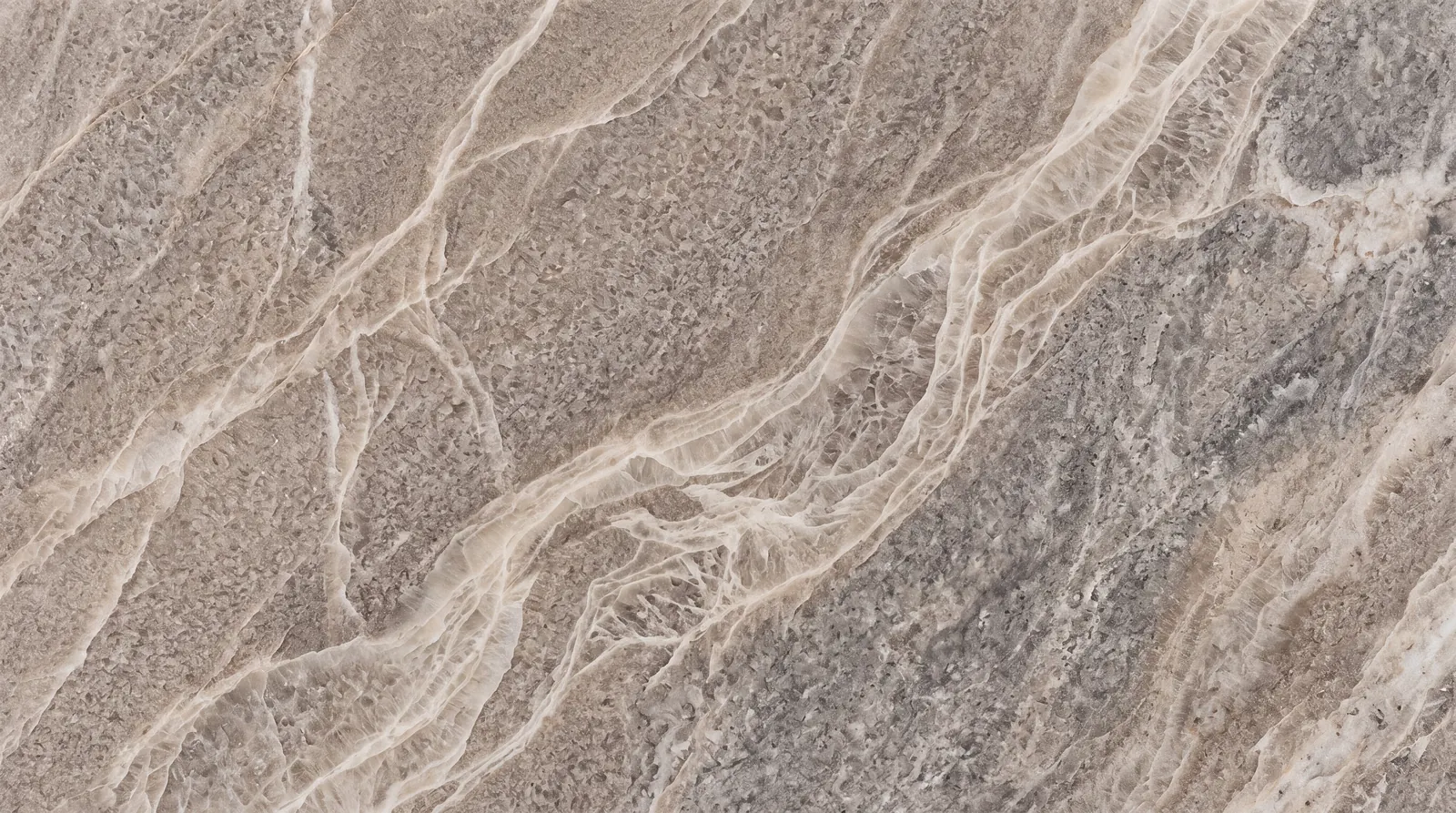
Illustrative rendering of one marble surface in three finishes. Ask to see real samples in your own light.

Finishes

Polished, honed or leathered: the finish changes the stone

The same slab can look like three different materials depending on how its surface is finished. Here is what each finish does, and what it hides.

Counter Top Sales · 3 minute read

Polished stone shows its color at full strength

A polished finish is ground and buffed until the surface reflects light. Color goes deep, veining sharpens, and dark granite reads almost black. Polishing also tightens the surface a little, so a polished slab tends to resist staining better than the same stone honed.

The tradeoff is that polish makes damage easy to see. On marble, every etch from lemon juice or wine shows as a dull patch against the shine. On any polished stone, scratches catch the light at an angle. In a kitchen that gets heavy use, that matters more than it does in a powder room.

Honed stone trades shine for calm

Honing stops before the final polish. The result is matte or softly satin, with quieter veining and a surface that feels like stone. It is the classic choice for marble in kitchens, because etching blends into a surface that was never glossy to begin with.

Honed surfaces are slightly more open, so they can take a stain more readily and may need sealing more often. On dark granite and soapstone, a honed finish can show fingerprints and cooking oil until it is wiped. It suits people who like a lived-in counter, and frustrates people who want it to look new every night.

Leathered stone keeps the texture you can feel

Leathering uses brushes to soften the surface without flattening it, leaving a low sheen and a subtle texture that follows the natural structure of the stone. Run a hand across it and you feel the grain.

It works best on granite, quartzite and some marbles, and it is especially good at hiding fingerprints and water spots on dark stone. The texture can hold a little more grime than a flat surface, so it rewards a quick scrub with a soft brush now and then.

Quartz finishes are set at the factory

Engineered quartz comes in polished, matte and textured finishes, but the finish is part of the product. It cannot be honed or leathered after the fact. Matte quartz is popular, and like honed stone it can show fingerprints and marks from metal utensils, which usually clean off.

See how marble wears in each finish
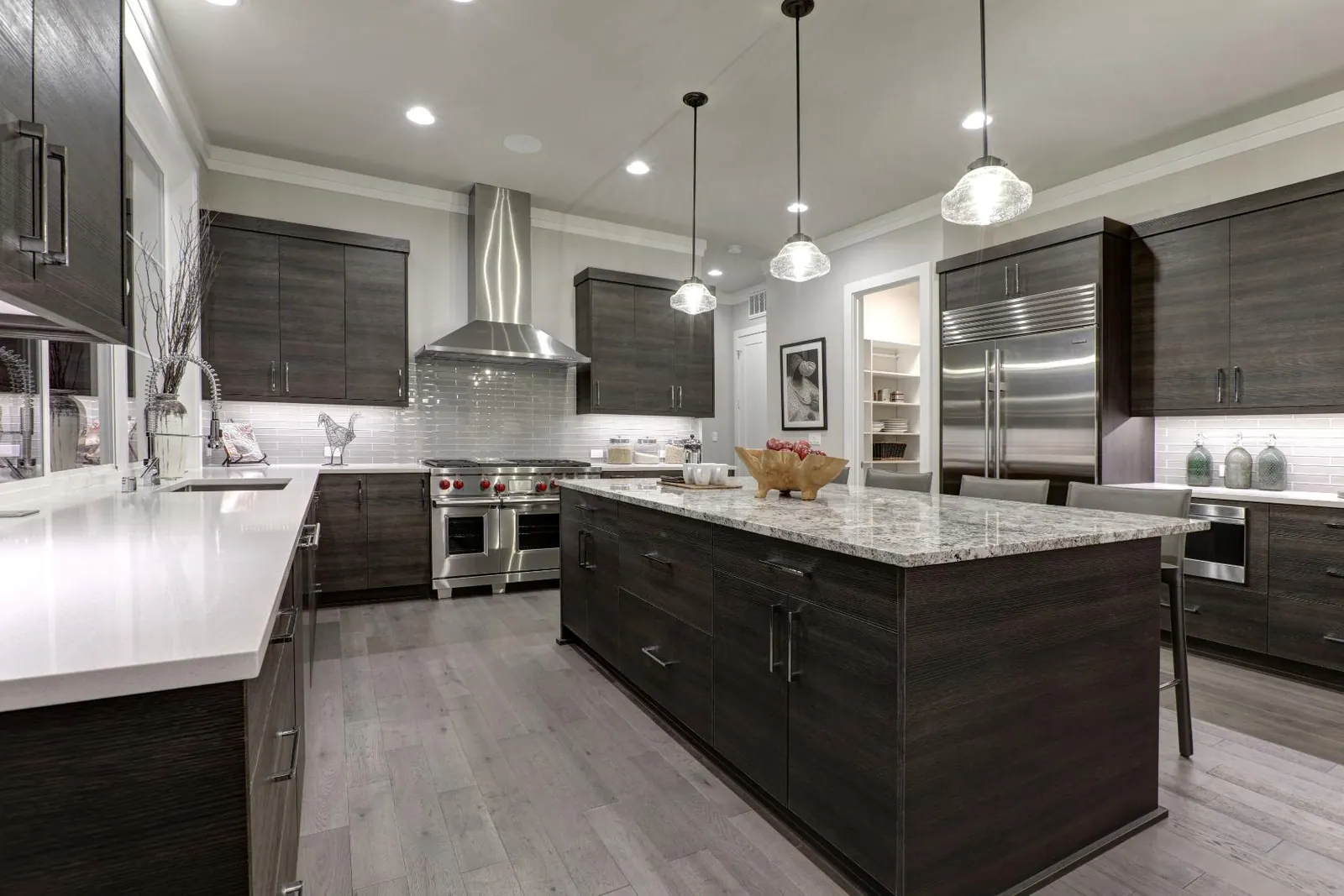
Quartzite waterfall island in a dark contemporary kitchen at dusk

Islands

Waterfall islands and mitered edges, planned properly

A waterfall island turns a countertop into a piece of furniture. It also asks more of the slab, the layout and the fabrication than any other detail in the kitchen.

Counter Top Sales · 3 minute read

Mitered edgeWaterfall end panelSeating overhang sideRecessed cabinet run
A waterfall island in outline. The top and end panels meet at 45 degree miters so the pattern carries over the corner.

A waterfall is a countertop that keeps going

On a waterfall island, the top does not stop at the edge. It turns 90 degrees and runs down the side of the island to the floor, on one end or both. Done well, the stone looks like a single folded sheet. Done badly, the veining breaks at the corner and the illusion is gone.

The corner is a miter: both pieces are cut at 45 degrees and joined so the face of the stone wraps around the turn. The joint is filled with color-matched epoxy and finished so it reads as a line, not a gap.

The slab has to be planned before anything is cut

If the stone has movement, the side panel should come from the piece of slab directly next to the top, so the veins continue across the miter. That means laying out the whole island on the slab at once, before any other piece of the kitchen claims that section of stone.

It also means more material. Each waterfall end adds a panel roughly the height of the island, and those panels need to come from a pattern-matched part of the slab. Quiet, uniform stones and many quartz patterns are more forgiving here. Dramatic quartzite and marble pay off the most, and demand the most care.

  • Decide on one waterfall end or two early. It changes the slab count.
  • Confirm the floor is finished and level before measurement.
  • Plan for chairs, vacuums and feet. The lower edge of a waterfall takes knocks.

Mitered edges give a thin slab a thick profile

The same technique works along the countertop edge. A strip of stone is mitered to the top so the edge looks two or three times thicker, with the pattern wrapping over the front. It reads as one solid block. A laminated edge, where a strip is glued flat underneath, is cheaper but leaves a visible line across the face.

Mitered corners are crisp, and crisp corners chip more easily than rounded ones. A slight ease along the outside edge takes the sharpness off without losing the look.

Plan a kitchen island with us

Edges

Edge profiles: eased, bevel, bullnose, ogee and mitered

The edge is the part of the countertop you touch most. It sets the style, decides how chips show and determines how easy the counter is to wipe clean.

Counter Top Sales · 3 minute read

What it looks like
Square edge with softened corners
Best for
Modern and transitional rooms, any material
Watch for
Square corners show chips more than rounded ones

Start with how the counter gets used

Edge profiles are often chosen from a sample board in a few seconds. That is a mistake. The edge is where hips bump, where pans get set down hard, and where crumbs either wipe straight into your hand or get stuck in a groove. Think about who uses the counter before you think about style.

As a rule, simpler profiles look more modern and hold up better. Detailed profiles look more traditional and ask for a little more cleaning.

The five profiles we get asked about most

Eased is a square edge with the sharp corners lightly softened. It suits almost every kitchen and every material. Bevel cuts a flat angle along the top corner, adding a crisp line of definition. Bullnose rounds the edge, either fully or on the top only, which is called a half bullnose.

Ogee is an S-shaped curve with a step, the most traditional of the group. Mitered builds a thicker edge by joining a second strip of stone at 45 degrees, so the pattern wraps over the front.

Match the profile to the thickness

Profiles look different on 2 cm and 3 cm stone. A full bullnose can make a thin slab look thinner. A large bevel removes visible thickness. If you want a heavy, solid look, a mitered edge does it better than any profile cut into a single layer of stone.

Compare surfaces for your edge
White countertop with gold-veined stone backsplash and brass faucet

Pairing

Pairing stone with cabinetry, hardware and backsplash

A countertop never sits alone. It has to work with the cabinets below it, the metal on the drawers and whatever goes on the wall behind it.

Counter Top Sales · 3 minute read

Bring a cabinet door to the decision.

If your cabinets are new, ask your cabinet supplier for a door or finish sample. Laying it on the stone you are considering answers most pairing questions in seconds.

Let one surface do the talking

The most common mistake we see is three busy surfaces competing. A heavily veined slab, a patterned tile backsplash and grained wood cabinets all fight for attention, and the room feels restless. Pick the surface you love most and let the others support it.

If the stone has strong movement, keep cabinets plain and the backsplash simple, or run the slab itself up the wall. If the cabinets are the statement, a quieter stone or a uniform quartz gives them room.

Match undertones, not just colors

White is never just white. Some stones lean warm, with cream, beige or gold in the veining. Others lean cool, with grey and blue. Warm stone sits naturally with wood, cream paint and brass. Cool stone works with crisp white, navy, grey and black cabinets.

Hold a sample against the actual cabinet door, not a photo of it. A mismatch in undertone is the reason a combination looks fine online and wrong in the room.

Use hardware to pick up the stone

Hardware is the easiest place to tie things together. Gold veining in a stone looks deliberate beside brass pulls and a brass faucet. Black hardware sharpens a soapstone or dark granite kitchen. Polished nickel and chrome suit cool marble and grey quartz. One metal finish across faucet and pulls usually reads cleaner than two.

Decide on the backsplash with the countertop

A full-height slab backsplash is the cleanest look and the easiest to wipe, with no grout lines. A short stone splash with tile above gives you more color and texture to play with. If you tile, pull the grout color from the stone so the two surfaces connect.

Lighting changes everything. Warm under-cabinet light pushes stone toward cream. Cooler light pulls it toward grey. Choose your bulbs before you judge the finished pairing.

Browse kitchens and baths

Care

Living with stone: daily care by material

Every countertop material asks for something different. Knowing what yours needs keeps the surface looking right for years and stops small problems from becoming permanent ones.

Counter Top Sales · 3 minute read

Granite

Daily cleaning
Warm water and mild soap, or a pH-neutral stone cleaner
Avoid
Vinegar, bleach and ammonia as routine cleaners
Sealing
Periodically, based on a water test
If something goes wrong
Most stains lift with a poultice

Most daily care is the same: mild soap and a soft cloth

For every material we install, the daily routine is simple. Wipe spills promptly, clean with warm water and a little mild dish soap or a pH-neutral stone cleaner, and dry with a soft cloth. Most damage comes from what people add to that routine, not from skipping it.

Skip vinegar, lemon-based sprays, bleach and abrasive powders as everyday cleaners. They dull sealers on natural stone, etch marble and can mark the resin in quartz over time.

Test natural stone before you reseal it

Granite, marble and quartzite benefit from sealing, but on no fixed calendar. Put a few drops of water on the counter and wait about 15 minutes. If the stone darkens under the water, it is absorbing and due for sealer. If the water beads and the stone stays the same color, leave it alone.

Test the areas that work hardest: beside the sink, by the range and wherever people set down coffee. Those spots wear first.

Know what each material forgives

Quartz forgives spills but not heat, so trivets are not optional. Marble forgives almost nothing acidic, and the best mindset is to expect patina. Soapstone forgives the most: scratches sand out with fine sandpaper and a coat of mineral oil. Granite and quartzite sit in the middle, tough on heat and wear, but happier when sealed.

Seen something you want in your own kitchen?

More answers on care and sealing