Wet bars
Getting an outdoor bar counter ready for the first Front Range freeze
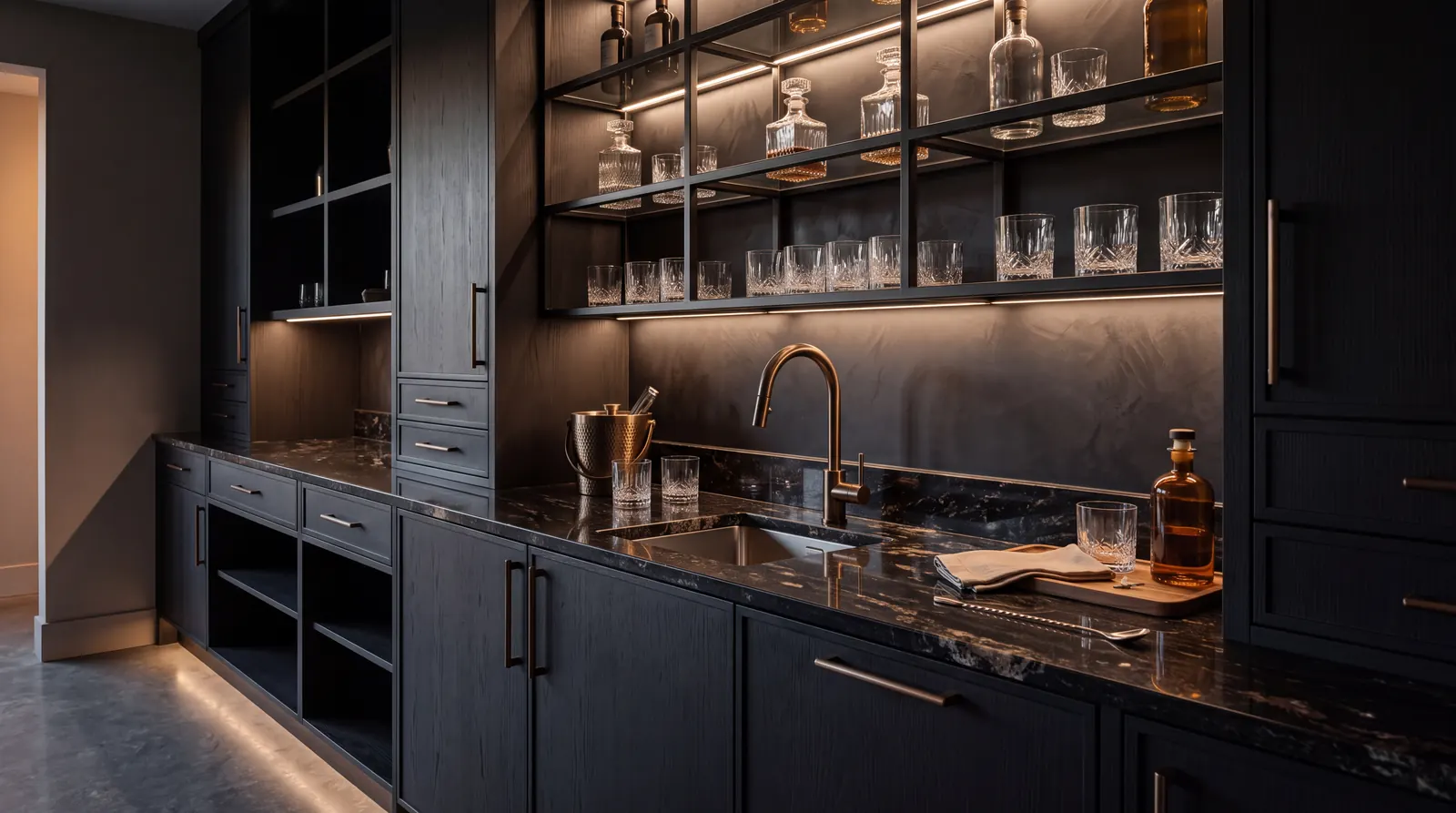
An outdoor bar counter needs three things before the first hard freeze: a sealer that still works (if the stone needs one), a dry surface with no standing water, and a plan for snow and ice that doesn't involve salt or metal tools. October brings the first hard freezes along the Front Range, and once they arrive the counter will sit through months of cold nights, bright afternoons and the occasional heavy spring snow.
What winter does to an outdoor counter
Water expands when it freezes, by roughly 9 percent. On a stone counter, the risk comes from water that has soaked into the surface or settled into a chip, a seam or a hairline crack. Freeze it, thaw it, freeze it again, and that small opening can grow.
Front Range winters add big daily temperature swings. A clear afternoon can warm a dark slab well above freezing, then the night drops it back below. The sun at altitude is strong, too, which matters for any material with resin in it.
Checklist by material
Find your counter's material below. If you aren't sure what it is, the paperwork from whoever fabricated and installed it should say.
Granite
Granite is a common choice for outdoor bars, and it handles cold well when it's sealed. Most granite is porous to some degree, and the sealer is what keeps water from soaking in. More on the stone itself is on our granite countertops page.
- Do a water test. Pour a small puddle of water on a few spots, including near the sink and along the front edge. If it still beads after several minutes, the sealer is doing its job. If the stone darkens, it's absorbing water and should be resealed.
- Clean first. Use a pH-neutral stone cleaner. Grease and grill residue left on the surface get locked under a fresh coat of sealer.
- Reseal on a mild, dry day. Sealers need clean, dry stone and time to cure. Read the product label for the minimum application temperature and cure time, then plan around the forecast.
- Inspect edges, corners and seams for chips or open joints where water can sit.
- Check any caulk where the counter meets a wall or backsplash.
Quartzite
True quartzite is a hard, dense natural stone, and it generally does well outdoors. The catch is that the name gets used loosely in the stone trade. Some slabs sold as quartzite are actually softer stones such as dolomite or marble, which absorb more water and etch with acids. Treat your counter based on how it behaves, not what it was called.
- Do the same water test as granite. Many quartzites barely absorb anything, but some do, and the test tells you which kind you have.
- Seal if the test shows absorption, using an impregnating sealer made for natural stone.
- Think back on past spills. If lemon, wine or a cocktail mixer has ever left a dull spot, the stone is likely more marble-like than true quartzite, and it deserves careful sealing and gentle cleaning.
- Inspect edges and seams for chips and gaps.
Soapstone
Soapstone is dense and largely nonporous, so it doesn't rely on a sealer to keep water out. That makes it one of the lower-maintenance choices for an outdoor bar. It is softer than granite, though, so it scratches and dings more easily, and those marks matter more in winter. Our soapstone page covers the stone in more detail.
- Skip the sealer. Soapstone doesn't need one for water resistance.
- Treat mineral oil as optional and cosmetic. It darkens the stone evenly but doesn't protect against freezing. Outdoors, the oil wears off and the stone lightens again, which is normal.
- Look for chips along edges and corners, since the softer stone is more prone to them, and keep water from collecting there.
- Plan to clear snow with something soft. Metal tools will scratch the surface.
Quartz
If you already have quartz outside, these steps can slow the wear:
- Cover it when it's not in use, mainly to block the sun. Use a breathable cover.
- Keep it dry and clear of snow, and don't let water pool along seams.
- Never use heat to melt ice on it. The resin doesn't tolerate high heat well, and sudden temperature changes stress any slab.
- Watch for color change. Discoloration from sun exposure is in the resin, and cleaning won't reverse it.
Before each freeze
- Check the forecast and clear the counter of anything that holds water: planters, ice buckets, cutting boards and dish mats.
- Wipe the surface dry, paying attention to the sink edge, seams and any low spots.
- Shut off and drain the bar sink and faucet if you have one. If you aren't sure how your water lines and drain should be winterized, have whoever handles your plumbing take care of it.
- Put on a breathable, fitted cover if you use one, and secure it so wind doesn't drag it across the stone.
- Check overhangs after storms. Heavy, wet snow on a long overhang adds weight, so brush it off.
What to leave alone
- Ice melt and rock salt. Chloride salts can damage stone surfaces and break down sealers. A soft broom or plastic scraper does the job.
- Metal shovels, ice picks and scrapers. They chip edges and scratch polished stone.
- Hot water on a frozen counter. Sudden heat on a cold slab creates thermal stress. Let the afternoon sun handle it.
- Sealing in the cold. If the mild days are gone, wait until spring. A rushed coat on cold stone won't cure properly.
- Plastic tarps wrapped tight. Non-breathable plastic traps condensation against the stone, which is exactly the water you're trying to keep away.
- Vinegar and harsh cleaners. Acidic and abrasive products wear down sealers and can etch some stones.
- Household patch jobs. Filling chips or cracks with glue or caulk from the garage can trap water underneath. Keep the spot dry and covered, and have a stone professional evaluate it, since cracks tend to widen with each freeze.
Planning an outdoor bar counter for next season
If your current counter is quartz, is showing cracks, or you're planning a new outdoor bar, the material choice matters more than any winter routine. Granite, quartzite and soapstone are the stones we offer that suit outdoor use. Marble is softer and more prone to etching and weathering, so we'd steer outdoor projects toward the other three.
Our wet bar countertops page covers how we handle consultation, material selection, measurement, fabrication and installation for bar tops. The in-home measurement is free, and estimates come with no obligation. Anything that depends on your particular setup, such as removing an existing top or reconnecting a sink, is worth asking about during the free estimate. You can reach our office Monday through Friday, 8:00am to 6:00pm.